
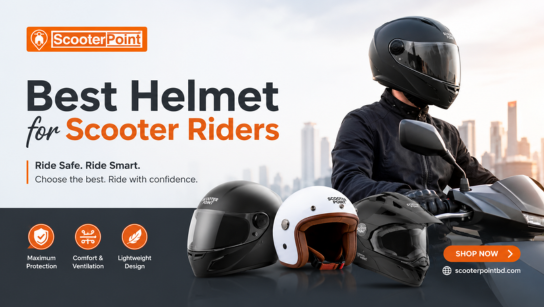
Riding a scooter in busy city traffic like Dhaka requires more than just skill—it requires proper safety protection, and the most important gear is a helmet. Choosing the best helmet for scooter riders can significantly reduce injury risk and improve comfort during daily commuting.
In this guide, you’ll learn what type of helmet is best, how to choose the right one, and what safety features you should never ignore.
Why Wearing a Helmet is Essential for Scooter Riders
A helmet is not just a legal requirement in many areas—it is life-saving protection.
Key benefits:
Protects your head from serious injury
Reduces risk of brain trauma in accidents
Improves confidence while riding
Protects from dust, wind, and weather
Increases safety in high-traffic roads
Studies show that head injuries are one of the most common causes of serious scooter accident damage, making helmets absolutely essential for every rider.
Types of Helmets for Scooter Riders
Choosing the right helmet depends on your riding style, speed, and comfort needs.
1. Full-Face Helmet (Best Protection)
A full-face helmet covers your entire head, including the chin and jaw.
Best for:
High-speed riding
Long-distance commuting
Maximum safety protection
Offers the highest level of safety
Protects face and jaw in crashes
Ideal for busy city and highway use
2. Open-Face / Jet Helmet (Most Popular in Cities)
This helmet covers the top and sides of your head but leaves the face open.
Best for:
City riding
Short-distance commuting
Hot weather conditions
Lightweight and comfortable
Better airflow and ventilation
Easy to wear daily
3. Modular Helmet (Hybrid Option)
A modular helmet combines full-face and open-face features with a flip-up chin bar.
Best for:
Riders who want flexibility
Mixed city and highway use
Versatile design
Balanced comfort and protection
4. Half Helmet (Basic Protection)
Covers only the top of the head.
Best for:
Very low-speed riding
Short trips only
Lightweight
Less protection compared to other types
How to Choose the Best Helmet for Scooter Riders
When selecting a helmet, don’t just focus on design—focus on safety and comfort.
1. Proper Fit
A helmet should:
Fit snugly on your head
Not move while shaking your head
Sit level on your forehead
A loose helmet reduces protection significantly.
2. Safety Certification
Always choose helmets with trusted certifications such as:
DOT (US standard)
ECE (European standard)
ISI (India standard)
These ensure the helmet has passed safety impact tests.
3. Ventilation System
Good airflow is important, especially in hot weather.
Look for:
Multiple air vents
Internal airflow channels
Sweat-absorbing padding
4. Weight
A lightweight helmet reduces neck strain during long rides. Ideally:
1200g – 1500g for comfort and safety balance
5. Visor Quality
Choose helmets with:
Anti-scratch visor
Anti-fog coating
UV protection
This improves visibility in all weather conditions.
6. Comfort & Padding
Good helmets should include:
Soft inner padding
Removable and washable liners
Anti-bacterial material
Common Mistakes to Avoid
Buying a helmet only for looks
Using an oversized helmet
Ignoring safety certification
Not fastening the chin strap properly
Using very cheap, low-quality helmets
Safety Tips for Scooter Riders
Always buckle your helmet properly
Replace helmet after any major accident
Change helmet every 3–5 years
Avoid using damaged or cracked helmets
Clean visor regularly for clear vision
Final Thoughts
The best helmet for scooter riders is not just the most expensive one—it is the one that offers proper fit, certified safety, good ventilation, and daily comfort.
For city riders in Bangladesh, a good quality full-face or jet helmet with ECE/DOT certification is usually the best choice.
Remember: A helmet doesn’t just protect your head—it protects your life.